
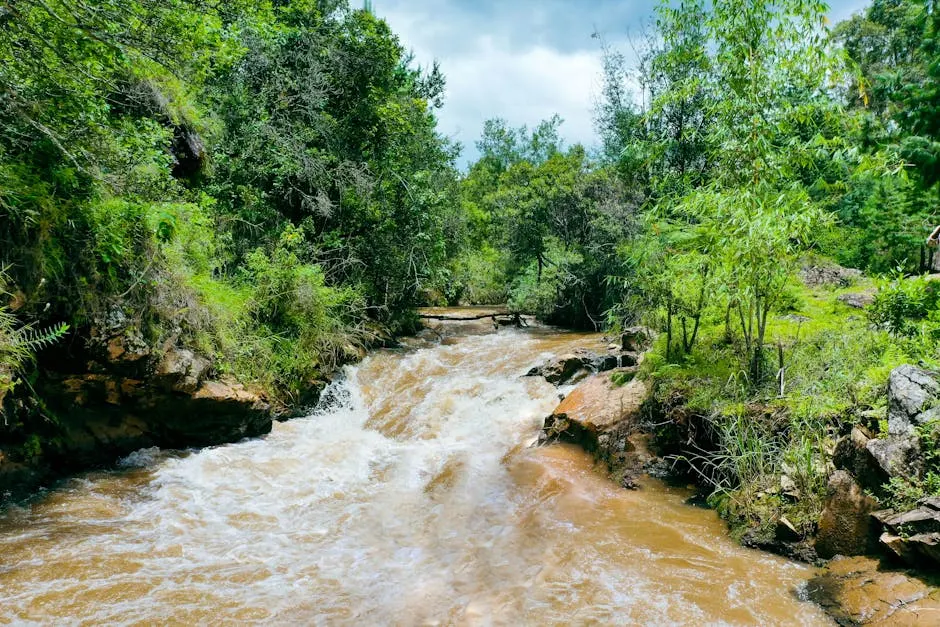
When people think about the water crisis in West Africa, they often think about drought, climate change, or lack of infrastructure. But there is another major factor affecting water availability across the region: deforestation.
Forests are not only home to wildlife. They also help protect freshwater systems. They support rainfall patterns, protect rivers, improve groundwater storage, and keep soil healthy.
When forests disappear, water systems become weaker. Rivers become more vulnerable, groundwater levels can decline, and communities may struggle to access safe water. The connection between forest loss and water scarcity is becoming a growing concern across West Africa.
Key Takeaways
- Deforestation is increasing pressure on freshwater resources across West Africa.
- Forests help maintain water cycles by storing rainwater and protecting water sources.
- Countries including Ghana, Nigeria, and Niger are experiencing the effects of forest loss and changing water availability.
- Reforestation has shown positive results in restoring vegetation and improving water systems.
- Long-term water security requires both clean water projects and environmental protection.
The Hidden Link Between Forests and Water Security
Water security means having reliable access to enough safe water for drinking, farming, sanitation, and daily needs. Many discussions about water shortages focus on rainfall levels or climate change. However, the health of natural environments also plays a major role.
Forests act like natural water storage systems. Tree roots help rainwater move into the ground. This supports groundwater supplies and helps maintain streams and rivers during dry seasons.
Forests also reduce soil erosion. When trees are removed, rainwater flows away faster and carries soil, waste, and pollutants into nearby water sources.
Over time, this can reduce water quality and make freshwater sources less reliable.
How Does Deforestation Cause Water Shortages?
Deforestation affects water systems in several ways.
1. Reduced Groundwater Recharge
Healthy forests allow rainwater to slowly enter the soil. This process helps refill underground water supplies that communities depend on through wells and springs.
When forests are removed, more water runs off the surface instead of reaching underground sources.
2. Damage to Rivers and Freshwater Sources
Trees help protect riverbanks and reduce erosion. Without forest cover, more soil enters rivers. This can increase pollution and make water treatment more difficult.
Communities that rely on rivers for drinking water may face greater challenges.
3. Increased Climate Pressure
Forests help regulate local temperatures and moisture levels. When large forest areas disappear, areas can become hotter and drier.
This can increase pressure on already limited water resources.
The Numbers Behind West Africa’s Water Crisis
The connection between deforestation and water availability is becoming clearer through recent research.
A joint report by WaterAid and Tree Aid highlighted the relationship between forest loss and declining surface water availability in parts of West Africa.
Key findings include:
- In Niger and Nigeria, the loss of every 1,000 hectares of forest was associated with an average loss of about 9.25 hectares of surface water.
- Around 45% of people in affected areas were living in locations where water was unsafe or insufficient for daily needs.
- Ghana loses approximately 24,800 hectares of forest every year.
- Nigeria loses more than 27,000 hectares of forest annually.
These figures show that forest loss is not only an environmental issue. It is also becoming a water-access and public-health challenge.
Countries Facing Water and Forest Challenges in West Africa
Different countries across West Africa are experiencing increasing pressure on natural resources.
Ghana
Ghana has experienced significant forest loss due to activities such as farming expansion, mining, and logging.
Forest decline affects watersheds that communities depend on for drinking water and agriculture.
Nigeria
Nigeria faces challenges from rapid population growth, land degradation, and changing rainfall patterns.
Forest loss in different regions has increased pressure on freshwater systems.
Niger
Niger is one of the countries most affected by water stress. However, it also illustrates how environmental restoration can create positive change.
Large-scale reforestation and land restoration efforts have helped improve vegetation coverage and support water availability in some areas.
The Human Impact of Water Insecurity
The effects of water shortages go far beyond access to drinking water. When communities lose reliable water sources, daily life becomes more difficult.
Health Challenges
Unsafe water increases the risk of diseases linked to poor sanitation and contaminated water.
Children are especially vulnerable because their health depends heavily on clean water and proper hygiene.
Impact on Women and Children
In many rural communities, women and children are responsible for collecting water. When nearby sources disappear, they may spend several hours walking each day.
This reduces time for education, work, and other important activities.
Impact on Farming and Food Security
Agriculture depends on reliable water supplies. When rainfall becomes unpredictable and water sources decline, farmers face challenges growing crops and supporting their families.
This can increase food insecurity and economic pressure.
Can Reforestation Help Restore Water Security?
Although deforestation creates serious challenges, the situation is not impossible to improve. Reforestation has shown that restoring natural environments can help rebuild water systems. Niger provides an important example.
Through vegetation restoration efforts, some areas have experienced improvements in land quality and water availability. Trees help rebuild healthier soil, reduce erosion, and support better water absorption.
This shows that environmental restoration is not only about protecting nature. It can directly support communities that depend on freshwater resources.
Why Water Solutions Need Environmental Protection
Building wells, pipelines, and water systems is important. However, long-term water security requires more than infrastructure. If surrounding ecosystems continue to decline, water sources can become harder to protect.
Sustainable solutions should combine:
- Clean water projects
- Forest protection
- Reforestation programs
- Better land management
- Community education
Protecting forests means protecting the natural systems that help communities access water.
How Communities Can Support Long-Term Change
Solving the West Africa water crisis requires cooperation between governments, organizations, communities, and individuals.
Effective solutions include:
- Protecting existing forests
- Supporting tree restoration projects
- Improving sustainable farming methods
- Creating reliable, clean water systems
- Educating communities about environmental protection
Small environmental actions can create long-term benefits when they are connected with community needs.
Final Thoughts
The West African water crisis is not only a problem of rainfall or infrastructure. The loss of forests is also affecting the natural systems that help protect freshwater resources. Forests, rivers, groundwater, and communities are closely connected.
Protecting these ecosystems can play an important role in creating safer and more sustainable water access for future generations. Addressing water challenges in West Africa requires both immediate support and long-term environmental solutions.
Frequently Asked Questions
How does deforestation affect water availability in West Africa?
Deforestation reduces the land’s ability to store and filter water. It can lower groundwater recharge, increase erosion, and damage freshwater sources.
Why are forests important for freshwater systems?
Forests help absorb rainfall, protect rivers, maintain soil quality, and support groundwater supplies that communities rely on.
What causes water shortages in West Africa?
Water shortages are caused by several factors, including climate change, population growth, limited infrastructure, drought, and environmental degradation, such as deforestation.
Can planting trees improve water access?
Yes. Reforestation can improve soil health, reduce erosion, and support healthier water systems over time.
What is the connection between climate change and water scarcity?
Climate change can change rainfall patterns, increase temperatures, and make water supplies less predictable, especially in vulnerable regions.