
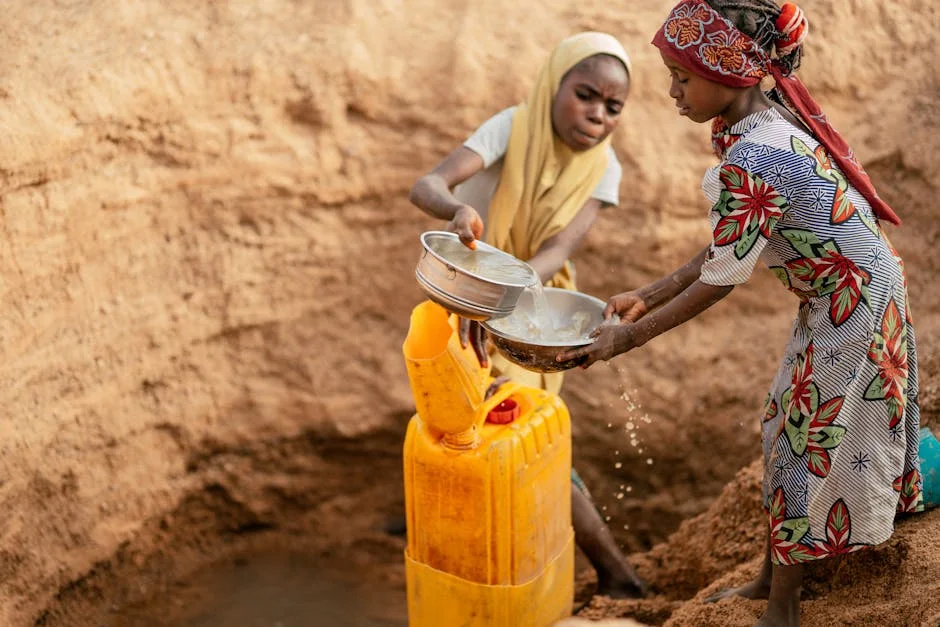
When people think about water scarcity in Africa, they often think about drought, climate change, or a lack of water infrastructure. But another major factor that makes the problem worse is land degradation.
Healthy land works like a natural water storage system. Good soil absorbs rainfall, supports vegetation, and helps refill underground water supplies.
When land becomes damaged, this natural process weakens. Soil loses its ability to retain water, rainfall runs off faster, groundwater levels decline, and communities face greater challenges in accessing clean water.
Across sub-Saharan Africa, land degradation is increasingly linked to the growing water crisis.
Key Takeaways
- Around 65% of Africa’s productive land is affected by degradation, according to estimates from the United Nations Convention to Combat Desertification (UNCCD).
- Soil erosion, vegetation loss, and poor land management reduce the ability of land to store and filter water.
- Water scarcity affects more than drinking water. It impacts farming, health, education, and local economies.
- Long-term water solutions require both sustainable infrastructure and environmental restoration.
- Restoring damaged land can improve water retention and strengthen community resilience.
What Is Land Degradation?
Land degradation happens when soil quality and natural ecosystems are damaged.
This can happen because of:
- Deforestation
- Overgrazing
- Unsustainable farming practices
- Soil erosion
- Drought
- Rising temperatures
- Poor land management
Healthy land supports plant growth and helps regulate water movement. But when vegetation disappears, and soil becomes weak, the land struggles to absorb rainfall. Instead of slowly storing water, rain flows away quickly, carrying valuable soil with it.
Over time, this reduces the amount of water available for communities, farming, and ecosystems.
How Does Land Degradation Cause Water Scarcity?
Land and water systems are deeply connected. When the land becomes unhealthy, water availability is affected in several ways.
1. Soil Loses Its Ability to Store Water
Healthy soil acts like a sponge. It absorbs rainfall and slowly releases water into rivers, lakes, and underground reserves.
When soil is damaged by erosion or vegetation loss, it becomes harder for rainwater to enter the ground. More water flows away as surface runoff, leaving less moisture behind.
2. Groundwater Levels Decline
Many rural communities across Africa depend on groundwater from wells and boreholes.
Groundwater is naturally replenished when rain percolates through the soil and reaches underground reserves. However, degraded land reduces this process.
Less water reaches aquifers, causing groundwater levels to decline over time.
3. Rivers and Water Sources Become Less Reliable
Vegetation helps protect rivers and streams.
When plants disappear, soil erosion increases. The extra sediment can damage water quality and affect freshwater sources.
Communities depending on rivers may experience more seasonal water shortages.
4. Agriculture Becomes More Difficult
Farming depends on healthy soil and reliable water. When land becomes degraded, crops struggle to grow because the soil cannot hold enough moisture and nutrients.
This creates a difficult cycle:
- Poor land reduces water availability.
- Less water reduces agricultural productivity.
- Lower productivity increases pressure on communities.
The Numbers Behind Africa’s Land and Water Crisis
Land degradation is one of the biggest environmental challenges affecting Africa.
According to the United Nations Convention to Combat Desertification (UNCCD):
- Around 65% of Africa’s productive land is affected by degradation.
- Land degradation threatens food production, biodiversity, and natural water systems.
Water access remains another major challenge.
According to WHO and UNICEF data:
- Hundreds of millions of people in sub-Saharan Africa still lack access to safely managed drinking water.
- Rural communities are among the most affected because they often depend on natural water sources.
These challenges are connected. When land loses its ability to store and protect water, communities become more vulnerable to shortages.
Why Rural Communities Feel the Impact the Most
Water scarcity affects much more than access to drinking water.
For many rural communities, water availability influences almost every part of daily life.
Health and Sanitation Challenges
Unsafe water increases the risk of diseases linked to contamination and poor sanitation.
When clean water is difficult to access, families may rely on unsafe sources shared with animals or exposed to pollution.
Children are especially vulnerable because their health depends heavily on safe water and hygiene.
Impact on Women and Children
In many rural areas, collecting water is a daily responsibility for women and children.
When nearby sources disappear, families may spend hours walking to find water.
This affects:
- School attendance
- Work opportunities
- Family income
- Overall quality of life
A water shortage often becomes a social and economic challenge.
Food Security Problems
Many African communities depend on small-scale farming.
When land quality declines and water becomes unreliable, crop production suffers.
Farmers may face:
- Lower harvests
- Loss of livestock
- Reduced income
- Greater uncertainty
This shows why water scarcity is not only an environmental issue. It is also a food and livelihood issue.
Why Building More Wells Alone Cannot Solve Water Scarcity
Building wells and improving water infrastructure are important steps. However, wells alone cannot solve the entire problem if the surrounding environment continues to decline.
If land cannot absorb rainfall and groundwater is not naturally restored, water sources may become harder to maintain.
This is why many experts now support a combined approach:
- Clean water infrastructure
- Land restoration
- Soil protection
- Reforestation
- Sustainable farming practices
Long-term water security depends on both access to water and protection of the systems that create and store water.
Sustainable Water Solutions: Combining Infrastructure With Land Restoration
Modern water projects are increasingly focusing on sustainability.
Solar-Powered Water Systems
Solar-powered wells are becoming more common in rural areas because they reduce dependence on fuel and lower long-term operating costs.
They can provide reliable water access while reducing maintenance challenges.
Land Regeneration
Restoring damaged land can improve water retention.
Methods include:
- Planting trees
- Protecting vegetation
- Improving soil quality
- Reducing erosion
- Supporting sustainable agriculture
Healthy landscapes are better able to capture and store rainfall.
Community-Based Water Management
Local involvement is also important.
When communities participate in maintaining water systems, projects are more likely to continue providing benefits over time.
The Growing Role of Clean Water Funding and Philanthropy
Improving water access across Africa requires significant investment. Organizations, charities, governments, and donors continue to support projects that improve access to clean water.
However, donor priorities are changing. Many supporters now look beyond short-term solutions and focus on projects that create lasting impact.
This includes:
- Sustainable water systems
- Community ownership
- Environmental restoration
- Transparent reporting
- Long-term maintenance plans
Tools such as GPS project verification, impact reports, and community updates are also helping improve accountability.
Can Restoring Land Help Improve Water Availability?
Yes, land restoration can play an important role in improving water security. Restoring vegetation helps protect soil, reduce erosion, and improve water absorption.
A healthier landscape can:
- Store more rainfall
- Support groundwater recharge
- Protect rivers
- Improve farming conditions
Countries across Africa are already exploring restoration programs to rebuild damaged ecosystems. These efforts show that environmental recovery can support communities facing water challenges.
Why Land Restoration and Water Access Must Work Together
The water crisis in Africa is not caused by one single problem.
It is connected to:
- Environmental damage
- Climate pressure
- Population growth
- Limited infrastructure
- Changing rainfall patterns
Solving this challenge requires a broader approach. Clean water projects provide immediate support. Land restoration protects future water availability. Together, these solutions can help communities become more resilient.
Final Thoughts
Water scarcity in Africa is not only a problem of finding new water sources. It is also a problem of protecting the land that helps create and store water.
When forests disappear, soil erodes, and ecosystems decline, communities feel the impact through reduced access to water, lower agricultural productivity, and greater daily challenges.
Long-term solutions must combine clean water infrastructure with land restoration. By protecting the environment and investing in sustainable water projects, communities can build a stronger and more secure future.
Frequently Asked Questions
What causes water scarcity in Africa?
Water scarcity in Africa is caused by several factors, including climate change, drought, population growth, limited infrastructure, and environmental problems such as land degradation.
How does land degradation affect water availability?
Land degradation reduces soil quality and makes it harder for rainfall to enter the ground. This lowers groundwater recharge and increases water shortages.
Why is healthy soil important for water security?
Healthy soil absorbs rainfall, stores moisture, supports vegetation, and helps maintain groundwater supplies.
Can restoring land reduce water scarcity?
Yes. Land restoration can improve water retention, reduce erosion, and support healthier freshwater systems.
Why are wells not enough to solve Africa’s water crisis?
Wells provide important access to water, but long-term water security also requires protecting the natural systems that recharge and sustain water sources.