BLOGS

How to Help Children in Africa Get Access to Clean Water in Rural Communities

For many children, getting clean water is part of a normal daily routine. But in many rural communities across Africa, finding water can take hours. Children often walk long distances before school to collect water from rivers, ponds, or unsafe sources.

This daily struggle affects much more than hydration. Unsafe water can lead to illness, missed school days, poor hygiene, and fewer opportunities for children to build a better future.

The good news is that sustainable clean water projects are helping communities create lasting change. By supporting reliable water systems, communities can improve health, education, and daily life for generations.

Key Takeaways

  • Millions of children across sub-Saharan Africa still lack reliable access to safe drinking water.
  • Unsafe water affects children’s health, education, and overall development.
  • Sustainable clean water projects, including solar-powered wells, can provide long-term solutions.
  • Community involvement and maintenance planning are important for lasting impact.
  • Supporting trusted water projects is one way individuals can help improve children’s lives.

Why Do Children in Rural Africa Lack Clean Water?

Water scarcity in rural Africa is caused by several connected challenges. Many villages are located far from major infrastructure networks. They may not have access to pipelines, treatment facilities, or reliable electricity.

As a result, families often depend on natural sources such as rivers, lakes, and shallow wells. These sources can become unsafe because of:

  • Bacteria and contamination
  • Flooding and runoff
  • Poor sanitation systems
  • Seasonal droughts
  • Changing rainfall patterns

According to WHO and UNICEF data, hundreds of millions of people in sub-Saharan Africa still lack access to safely managed drinking water.

Children are among the most affected because they often carry the responsibility of collecting water for their families.

How Unsafe Water Affects Children

Clean water is not only about drinking. It affects almost every part of a child’s life.

Health Challenges

Unsafe water can spread diseases linked to contamination and poor sanitation. Children are especially vulnerable because their bodies are still developing.

Repeated illnesses can affect:

  • Growth
  • Learning ability
  • School attendance
  • Overall wellbeing

A reliable source of clean water can reduce these risks and improve daily living conditions.

Education Challenges

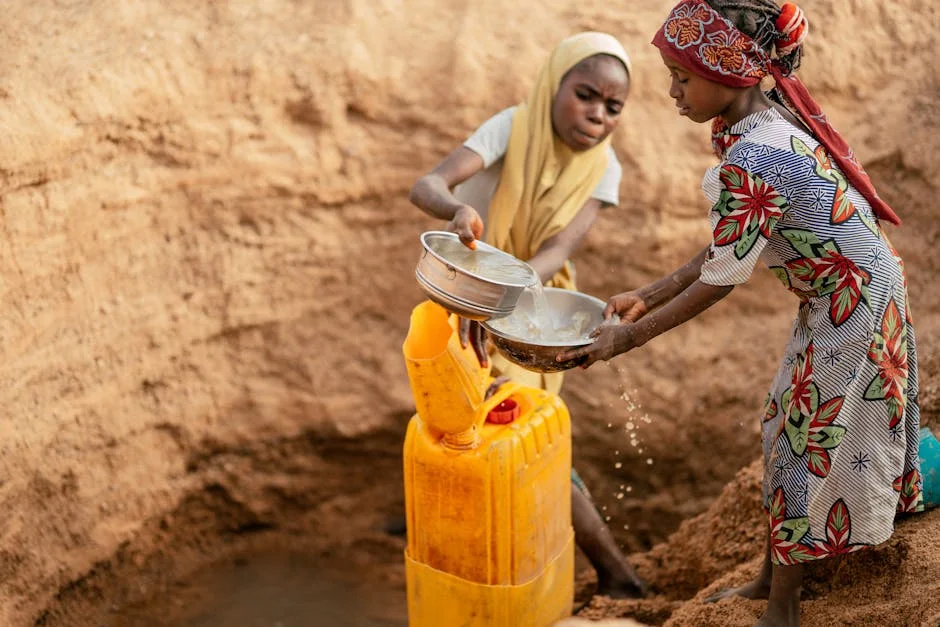
For many children, collecting water takes time away from school. Some children wake up early and walk several hours before classes begin.

Others may miss school entirely during dry seasons, when finding water becomes the family’s top priority.

When communities gain nearby access to clean water, children have more time to:

  • Attend school
  • Complete homework
  • Participate in activities
  • Focus on learning

Impact on Girls and Young Women

In many rural communities, girls are often responsible for collecting water. Long walks for water can limit educational opportunities and increase daily challenges.

Improving water access helps create safer conditions and gives children more opportunities to focus on education.

Why Rural Communities Face Greater Water Challenges

Water problems in rural areas rarely come from one single cause. Several issues often happen together.

Limited Infrastructure

Remote villages may not have:

  • Water pipelines
  • Treatment facilities
  • Electricity networks
  • Regular maintenance services

Even when water systems are installed, they may fail to function without proper training and support.

Climate Pressure

Changing weather patterns are affecting many communities. Longer dry seasons and unpredictable rainfall can reduce the availability of traditional water sources. Communities that depend on seasonal rivers or ponds often face the greatest challenges.

Environmental Damage

Land degradation, deforestation, and soil erosion can also affect water availability. Healthy land helps store rainfall and support groundwater supplies.

When ecosystems become damaged, communities may have fewer reliable water sources.

How Sustainable Clean Water Projects Help Children

Short-term emergency support can help during a crisis. However, long-term change requires sustainable solutions that communities can depend on.

This is why many organizations focus on building reliable water systems. Organizations like Synergy Heals help communities move from short-term water support toward reliable long-term access 

Solar-Powered Wells: A Long-Term Water Solution

Solar-powered wells are becoming an important solution in rural areas. These systems use solar energy to power pumps that bring groundwater to the surface.

They can provide several benefits:

  • Reliable access to clean water
  • Lower operating costs
  • Less dependence on fuel
  • Better long-term sustainability

For communities without reliable electricity, solar-powered systems can provide a practical solution.

Community-Owned Water Projects Create Lasting Impact

A successful water project is not only about building a well.

Long-term success also depends on:

  • Local training
  • Community involvement
  • Maintenance planning
  • Regular monitoring

When communities understand how to manage and maintain water systems, projects are more likely to continue helping families for years.

How Clean Water Changes Children’s Lives

Access to clean water creates benefits that go beyond the water source itself.

Better Health

Children have safer drinking water and improved hygiene conditions. This can reduce exposure to preventable illnesses.

More Time for Education

When water is available closer to home, children spend less time collecting it. They gain more opportunities to attend school and focus on learning.

Stronger Communities

Clean water supports:

  • Families
  • Schools
  • Health centers
  • Local businesses
  • Agriculture

A single water project can improve daily life across an entire community.

How You Can Help Children in Africa Get Clean Water

Many people want to support access to clean water but are unsure where to start. Supporting trusted organizations working on sustainable water projects can make a meaningful difference.

Ways to help include:

Support Clean Water Projects

Donations can help fund:

  • Water wells
  • Solar-powered water systems
  • Water pumps
  • Sanitation programs
  • Hygiene education

Choose Transparent Organizations

Before supporting a project, look for organizations that provide:

  • Clear project information
  • Verified locations
  • Community details
  • Progress updates
  • Impact reports

Transparency helps donors understand how their support creates change.

Share Awareness

Clean water challenges often receive attention only during emergencies. Sharing information helps more people understand the long-term needs of rural communities.

Greater awareness can lead to more support for sustainable solutions.

What Makes a Clean Water Project Effective?

A successful clean water project focuses on long-term results.

Important factors include:

Reliable Infrastructure

The system should be designed for the local environment and community needs.

Local Participation

Communities should play a role in managing and protecting water sources.

Regular Maintenance

A plan should exist for repairs and ongoing support.

Sustainable Design

Solutions such as solar-powered wells can reduce operating challenges in remote areas.

Why Clean Water Access Is an Investment in the Future

Clean water helps children today while creating stronger communities tomorrow.

When children have access to safe water, they have better opportunities to:

  • Stay healthy
  • Attend school
  • Learn new skills
  • Support their families in the future

Water access is not only a humanitarian need. It is a foundation for education, health, and community development.

Final Thoughts

For millions of children in rural Africa, clean water is not always easy to access. A long walk for water can mean missed classes, health risks, and fewer opportunities. But sustainable clean water projects are creating positive change.

By supporting reliable water systems, communities can give children safer lives, better health, and more time to learn. Clean water is more than a resource. It is a chance for children and communities to build a stronger future.

Frequently Asked Questions

How can I help children in Africa get clean water?

You can support trusted clean water organizations that fund sustainable projects such as wells, solar-powered systems, and community water programs.

Many rural communities face challenges due to limited infrastructure, climate pressure, environmental changes, and distance from reliable water sources.

Yes. When projects are properly planned and maintained, clean water donations can improve health, education, and community stability.

Projects with sustainable infrastructure, community involvement, maintenance plans, and transparent reporting are more likely to create lasting benefits.

When children spend less time collecting water, they have more time to attend school, study, and participate in learning activities.

What Causes Water Scarcity in Africa? Land Degradation Fully Explained

When people think about water scarcity in Africa, they often think about drought, climate change, or a lack of water infrastructure. But another major factor that makes the problem worse is land degradation.

Healthy land works like a natural water storage system. Good soil absorbs rainfall, supports vegetation, and helps refill underground water supplies.

When land becomes damaged, this natural process weakens. Soil loses its ability to retain water, rainfall runs off faster, groundwater levels decline, and communities face greater challenges in accessing clean water.

Across sub-Saharan Africa, land degradation is increasingly linked to the growing water crisis.

Key Takeaways

  • Around 65% of Africa’s productive land is affected by degradation, according to estimates from the United Nations Convention to Combat Desertification (UNCCD).
  • Soil erosion, vegetation loss, and poor land management reduce the ability of land to store and filter water.
  • Water scarcity affects more than drinking water. It impacts farming, health, education, and local economies.
  • Long-term water solutions require both sustainable infrastructure and environmental restoration.
  • Restoring damaged land can improve water retention and strengthen community resilience.

What Is Land Degradation?

Land degradation happens when soil quality and natural ecosystems are damaged.

This can happen because of:

  • Deforestation
  • Overgrazing
  • Unsustainable farming practices
  • Soil erosion
  • Drought
  • Rising temperatures
  • Poor land management

Healthy land supports plant growth and helps regulate water movement. But when vegetation disappears, and soil becomes weak, the land struggles to absorb rainfall. Instead of slowly storing water, rain flows away quickly, carrying valuable soil with it.

Over time, this reduces the amount of water available for communities, farming, and ecosystems.

How Does Land Degradation Cause Water Scarcity?

Land and water systems are deeply connected. When the land becomes unhealthy, water availability is affected in several ways.

1. Soil Loses Its Ability to Store Water

Healthy soil acts like a sponge. It absorbs rainfall and slowly releases water into rivers, lakes, and underground reserves.

When soil is damaged by erosion or vegetation loss, it becomes harder for rainwater to enter the ground. More water flows away as surface runoff, leaving less moisture behind.

2. Groundwater Levels Decline

Many rural communities across Africa depend on groundwater from wells and boreholes.

Groundwater is naturally replenished when rain percolates through the soil and reaches underground reserves. However, degraded land reduces this process.

Less water reaches aquifers, causing groundwater levels to decline over time.

3. Rivers and Water Sources Become Less Reliable

Vegetation helps protect rivers and streams.

When plants disappear, soil erosion increases. The extra sediment can damage water quality and affect freshwater sources.

Communities depending on rivers may experience more seasonal water shortages.

4. Agriculture Becomes More Difficult

Farming depends on healthy soil and reliable water. When land becomes degraded, crops struggle to grow because the soil cannot hold enough moisture and nutrients.

This creates a difficult cycle:

  • Poor land reduces water availability.
  • Less water reduces agricultural productivity.
  • Lower productivity increases pressure on communities.

The Numbers Behind Africa’s Land and Water Crisis

Land degradation is one of the biggest environmental challenges affecting Africa.

According to the United Nations Convention to Combat Desertification (UNCCD):

  • Around 65% of Africa’s productive land is affected by degradation.
  • Land degradation threatens food production, biodiversity, and natural water systems.

Water access remains another major challenge.

According to WHO and UNICEF data:

  • Hundreds of millions of people in sub-Saharan Africa still lack access to safely managed drinking water.
  • Rural communities are among the most affected because they often depend on natural water sources.

These challenges are connected. When land loses its ability to store and protect water, communities become more vulnerable to shortages.

Why Rural Communities Feel the Impact the Most

Water scarcity affects much more than access to drinking water.

For many rural communities, water availability influences almost every part of daily life.

Health and Sanitation Challenges

Unsafe water increases the risk of diseases linked to contamination and poor sanitation.

When clean water is difficult to access, families may rely on unsafe sources shared with animals or exposed to pollution.

Children are especially vulnerable because their health depends heavily on safe water and hygiene.

Impact on Women and Children

In many rural areas, collecting water is a daily responsibility for women and children.

When nearby sources disappear, families may spend hours walking to find water.

This affects:

  • School attendance
  • Work opportunities
  • Family income
  • Overall quality of life

A water shortage often becomes a social and economic challenge.

Food Security Problems

Many African communities depend on small-scale farming.

When land quality declines and water becomes unreliable, crop production suffers.

Farmers may face:

  • Lower harvests
  • Loss of livestock
  • Reduced income
  • Greater uncertainty

This shows why water scarcity is not only an environmental issue. It is also a food and livelihood issue.

Why Building More Wells Alone Cannot Solve Water Scarcity

Building wells and improving water infrastructure are important steps. However, wells alone cannot solve the entire problem if the surrounding environment continues to decline.

If land cannot absorb rainfall and groundwater is not naturally restored, water sources may become harder to maintain.

This is why many experts now support a combined approach:

  • Clean water infrastructure
  • Land restoration
  • Soil protection
  • Reforestation
  • Sustainable farming practices

Long-term water security depends on both access to water and protection of the systems that create and store water.

Sustainable Water Solutions: Combining Infrastructure With Land Restoration

Modern water projects are increasingly focusing on sustainability.

Solar-Powered Water Systems

Solar-powered wells are becoming more common in rural areas because they reduce dependence on fuel and lower long-term operating costs.

They can provide reliable water access while reducing maintenance challenges.

Land Regeneration

Restoring damaged land can improve water retention.

Methods include:

  • Planting trees
  • Protecting vegetation
  • Improving soil quality
  • Reducing erosion
  • Supporting sustainable agriculture

Healthy landscapes are better able to capture and store rainfall.

Community-Based Water Management

Local involvement is also important.

When communities participate in maintaining water systems, projects are more likely to continue providing benefits over time.

The Growing Role of Clean Water Funding and Philanthropy

Improving water access across Africa requires significant investment. Organizations, charities, governments, and donors continue to support projects that improve access to clean water.

However, donor priorities are changing. Many supporters now look beyond short-term solutions and focus on projects that create lasting impact.

This includes:

  • Sustainable water systems
  • Community ownership
  • Environmental restoration
  • Transparent reporting
  • Long-term maintenance plans

Tools such as GPS project verification, impact reports, and community updates are also helping improve accountability.

Can Restoring Land Help Improve Water Availability?

Yes, land restoration can play an important role in improving water security. Restoring vegetation helps protect soil, reduce erosion, and improve water absorption.

A healthier landscape can:

  • Store more rainfall
  • Support groundwater recharge
  • Protect rivers
  • Improve farming conditions

Countries across Africa are already exploring restoration programs to rebuild damaged ecosystems. These efforts show that environmental recovery can support communities facing water challenges.

Why Land Restoration and Water Access Must Work Together

The water crisis in Africa is not caused by one single problem.

It is connected to:

  • Environmental damage
  • Climate pressure
  • Population growth
  • Limited infrastructure
  • Changing rainfall patterns

Solving this challenge requires a broader approach. Clean water projects provide immediate support. Land restoration protects future water availability. Together, these solutions can help communities become more resilient.

Final Thoughts

Water scarcity in Africa is not only a problem of finding new water sources. It is also a problem of protecting the land that helps create and store water.

When forests disappear, soil erodes, and ecosystems decline, communities feel the impact through reduced access to water, lower agricultural productivity, and greater daily challenges.

Long-term solutions must combine clean water infrastructure with land restoration. By protecting the environment and investing in sustainable water projects, communities can build a stronger and more secure future.

Frequently Asked Questions

What causes water scarcity in Africa?

Water scarcity in Africa is caused by several factors, including climate change, drought, population growth, limited infrastructure, and environmental problems such as land degradation.

Land degradation reduces soil quality and makes it harder for rainfall to enter the ground. This lowers groundwater recharge and increases water shortages.

Healthy soil absorbs rainfall, stores moisture, supports vegetation, and helps maintain groundwater supplies.

Yes. Land restoration can improve water retention, reduce erosion, and support healthier freshwater systems.

Wells provide important access to water, but long-term water security also requires protecting the natural systems that recharge and sustain water sources.

West Africa Water Crisis & Deforestation: Environmental Link Explained

When people think about the water crisis in West Africa, they often think about drought, climate change, or lack of infrastructure. But there is another major factor affecting water availability across the region: deforestation.

Forests are not only home to wildlife. They also help protect freshwater systems. They support rainfall patterns, protect rivers, improve groundwater storage, and keep soil healthy.

When forests disappear, water systems become weaker. Rivers become more vulnerable, groundwater levels can decline, and communities may struggle to access safe water. The connection between forest loss and water scarcity is becoming a growing concern across West Africa.

Key Takeaways

  • Deforestation is increasing pressure on freshwater resources across West Africa.
  • Forests help maintain water cycles by storing rainwater and protecting water sources.
  • Countries including Ghana, Nigeria, and Niger are experiencing the effects of forest loss and changing water availability.
  • Reforestation has shown positive results in restoring vegetation and improving water systems.
  • Long-term water security requires both clean water projects and environmental protection.

The Hidden Link Between Forests and Water Security

Water security means having reliable access to enough safe water for drinking, farming, sanitation, and daily needs. Many discussions about water shortages focus on rainfall levels or climate change. However, the health of natural environments also plays a major role.

Forests act like natural water storage systems. Tree roots help rainwater move into the ground. This supports groundwater supplies and helps maintain streams and rivers during dry seasons.

Forests also reduce soil erosion. When trees are removed, rainwater flows away faster and carries soil, waste, and pollutants into nearby water sources.

Over time, this can reduce water quality and make freshwater sources less reliable.

How Does Deforestation Cause Water Shortages?

Deforestation affects water systems in several ways.

1. Reduced Groundwater Recharge

Healthy forests allow rainwater to slowly enter the soil. This process helps refill underground water supplies that communities depend on through wells and springs.

When forests are removed, more water runs off the surface instead of reaching underground sources.

2. Damage to Rivers and Freshwater Sources

Trees help protect riverbanks and reduce erosion. Without forest cover, more soil enters rivers. This can increase pollution and make water treatment more difficult.

Communities that rely on rivers for drinking water may face greater challenges.

3. Increased Climate Pressure

Forests help regulate local temperatures and moisture levels. When large forest areas disappear, areas can become hotter and drier.

This can increase pressure on already limited water resources.

The Numbers Behind West Africa’s Water Crisis

The connection between deforestation and water availability is becoming clearer through recent research.

A joint report by WaterAid and Tree Aid highlighted the relationship between forest loss and declining surface water availability in parts of West Africa.

Key findings include:

  • In Niger and Nigeria, the loss of every 1,000 hectares of forest was associated with an average loss of about 9.25 hectares of surface water.
  • Around 45% of people in affected areas were living in locations where water was unsafe or insufficient for daily needs.
  • Ghana loses approximately 24,800 hectares of forest every year.
  • Nigeria loses more than 27,000 hectares of forest annually.

These figures show that forest loss is not only an environmental issue. It is also becoming a water-access and public-health challenge.

Countries Facing Water and Forest Challenges in West Africa

Different countries across West Africa are experiencing increasing pressure on natural resources.

Ghana

Ghana has experienced significant forest loss due to activities such as farming expansion, mining, and logging.

Forest decline affects watersheds that communities depend on for drinking water and agriculture.

Nigeria

Nigeria faces challenges from rapid population growth, land degradation, and changing rainfall patterns.

Forest loss in different regions has increased pressure on freshwater systems.

Niger

Niger is one of the countries most affected by water stress. However, it also illustrates how environmental restoration can create positive change.

Large-scale reforestation and land restoration efforts have helped improve vegetation coverage and support water availability in some areas.

The Human Impact of Water Insecurity

The effects of water shortages go far beyond access to drinking water. When communities lose reliable water sources, daily life becomes more difficult.

Health Challenges

Unsafe water increases the risk of diseases linked to poor sanitation and contaminated water.

Children are especially vulnerable because their health depends heavily on clean water and proper hygiene.

Impact on Women and Children

In many rural communities, women and children are responsible for collecting water. When nearby sources disappear, they may spend several hours walking each day.

This reduces time for education, work, and other important activities.

Impact on Farming and Food Security

Agriculture depends on reliable water supplies. When rainfall becomes unpredictable and water sources decline, farmers face challenges growing crops and supporting their families.

This can increase food insecurity and economic pressure.

Can Reforestation Help Restore Water Security?

Although deforestation creates serious challenges, the situation is not impossible to improve. Reforestation has shown that restoring natural environments can help rebuild water systems. Niger provides an important example.

Through vegetation restoration efforts, some areas have experienced improvements in land quality and water availability. Trees help rebuild healthier soil, reduce erosion, and support better water absorption.

This shows that environmental restoration is not only about protecting nature. It can directly support communities that depend on freshwater resources.

Why Water Solutions Need Environmental Protection

Building wells, pipelines, and water systems is important. However, long-term water security requires more than infrastructure. If surrounding ecosystems continue to decline, water sources can become harder to protect.

Sustainable solutions should combine:

  • Clean water projects
  • Forest protection
  • Reforestation programs
  • Better land management
  • Community education

Protecting forests means protecting the natural systems that help communities access water.

How Communities Can Support Long-Term Change

Solving the West Africa water crisis requires cooperation between governments, organizations, communities, and individuals.

Effective solutions include:

  • Protecting existing forests
  • Supporting tree restoration projects
  • Improving sustainable farming methods
  • Creating reliable, clean water systems
  • Educating communities about environmental protection

Small environmental actions can create long-term benefits when they are connected with community needs.

Final Thoughts

The West African water crisis is not only a problem of rainfall or infrastructure. The loss of forests is also affecting the natural systems that help protect freshwater resources.  Forests, rivers, groundwater, and communities are closely connected.

Protecting these ecosystems can play an important role in creating safer and more sustainable water access for future generations. Addressing water challenges in West Africa requires both immediate support and long-term environmental solutions.

Frequently Asked Questions

How does deforestation affect water availability in West Africa?

Deforestation reduces the land’s ability to store and filter water. It can lower groundwater recharge, increase erosion, and damage freshwater sources.

Forests help absorb rainfall, protect rivers, maintain soil quality, and support groundwater supplies that communities rely on.

Water shortages are caused by several factors, including climate change, population growth, limited infrastructure, drought, and environmental degradation, such as deforestation.

Yes. Reforestation can improve soil health, reduce erosion, and support healthier water systems over time.

Climate change can change rainfall patterns, increase temperatures, and make water supplies less predictable, especially in vulnerable regions.

Why Every Gift Matters, and Where It Goes

People sometimes ask whether a single donation really makes a difference. In the villages we serve, the answer is yes — and the people there will tell you so themselves. When word reached one village that a borehole might be coming, they didn’t wait quietly. They threw a party.

“The whole village is happy today, because we heard we're going to have clean water. We started a party to show our joy — and to let people know to help us put wells in our village.” — Moussa Keita, Kinienkoura

That is what hope looks like here. Now here is exactly where your gift goes.

We drill one complete well at a time. A deep, solar-powered, tested well for a village costs about $20,000. We drill deep through rock to reach clean water, install a solar pump, test the water to confirm it’s safe, and work with the community so the well keeps running for years. We don’t drill and leave.

And we bring the land back, too. As we drill, we train people in the village to restore the soil and greenery around the well, so the water and the land recover together.

One well moves many of the United Nations’ Global Goals at once:

Clean water (SDG 6), health (SDG 3), education (SDG 4), gender equality (SDG 5), less poverty (SDG 1), and healthier land (SDG 15). Solve the water, and you move all of them — because every one of those problems, the families of Kinienkoura traced back to a single cause: no clean water.

No gift is too small. Whether you fund a whole well or a few feet of it, you become part of the village that finally has water.  [Link: Donate]

When Children Fetch Water Instead of Learning

In Kinienkoura, the school day doesn’t start with a lesson. For many children, it starts before sunrise, with a long walk to find water.

“Sometimes we wake the children at 4 or 5 in the morning and spend all day fetching water. They get to school late, and the teachers send them away for being late.” — A parent in Kinienkoura

The children feel it most. One student put it simply: it’s too hard to get water, and they’re punished for the time it takes.

“It's too hard to get water. We travel every time to fetch water a kilometer away. Often when we go, we're late for school, and the teachers chase us out of class because we're late.” — A student, Kinienkoura

The school itself is caught in the same crisis. The principal of Kinienkoura Elementary described what it means to run a school with no water:

“I have 430 students, 127 of them girls. The children drink so much water that the need spills over into neighboring families' supplies, and they come and shout at us. Now I tell every child to bring an old juice bottle from home, fill it, bring it to school, and take it back home to refill for the next day.” — Principal, Kinienkoura Elementary School

Six teachers work at that school. Every one of them goes home to a family facing the same water problem. When a child spends the morning carrying water instead of sitting in class, the cost isn’t just one missed lesson — it’s a future narrowed, one day at a time. And it falls hardest on girls, who carry the most water and lose the most school.

A well at or near a school gives that time back. Children get to stay children, and students.  [Link: Donate]

Why the Kankan Region Needs Clean Water

In the Kankan region of eastern Guinea, clean water is not something most families can count on. The rivers run low for months. The few wells that still work can be kilometers away. And the water people can reach is often dirty enough to make them sick.

We asked a woman in Djoma Kinienkoura what daily life is like. She didn’t soften it:

“If we say we're getting clean water, we'd be lying to you. To get clean water, you have to pay a lot of money. Look at the color of our water — it's the color of a toad's urine.” — Kanko Kouyate, Djoma Kinienkoura

That is the daily reality for thousands of families here. The data behind it is just as stark. According to UNICEF, 190 million children across ten African countries face a combined threat of unsafe water, poor sanitation, and disease. Worldwide, more than 1,000 children under five die every day from illnesses tied to dirty water and poor sanitation — and a large share of those deaths are concentrated in West and Central Africa.

In one study in Ebolowa, Cameroon, 97% of children under five had suffered from a waterborne disease. The pattern across the region is the same: when the water is dirty, children pay the highest price. Families in Kinienkoura told us they have watched it happen.

“A lot of people have died from dirty water. Old people, children, babies — because children don't know the difference between clean and dirty water. When our old people get sick here, we're always told it's because of the worms from the dirty water.” — A resident of Kinienkoura

This is why we start where the need is greatest. Our first well is going into a village in this region — drilled deep, through solid rock, to reach water that is clean and stays clean. We test it before anyone drinks it. One well changes a village’s health from the very first day.

You can help fund that first well. Every gift goes straight into the ground.  [Link: Donate]

unnamed4
Read More
unnamed3
Read More
unnamed2
Read More
Read More
Read More
Read More